
 Image 1 of 4
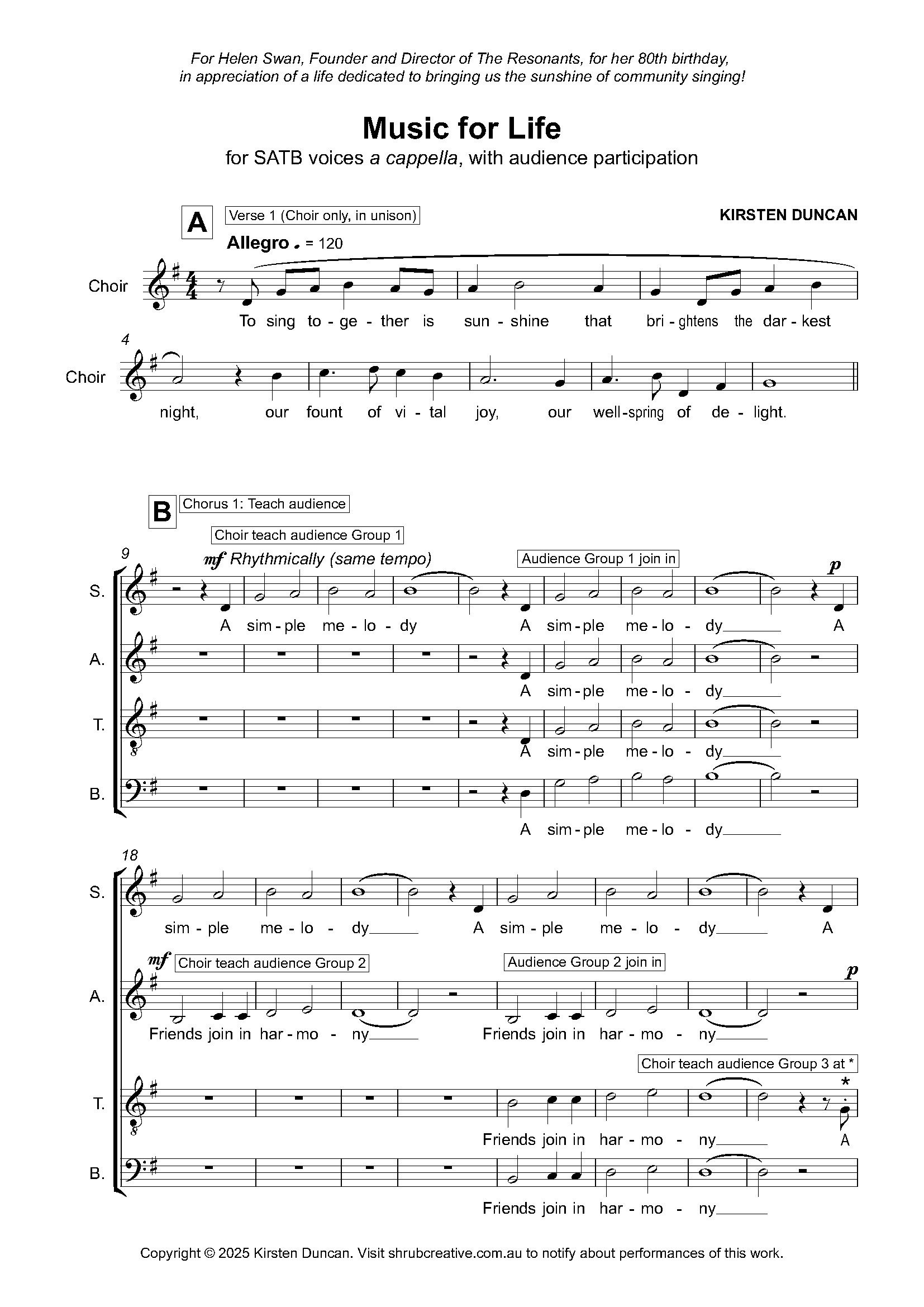 Image 2 of 4
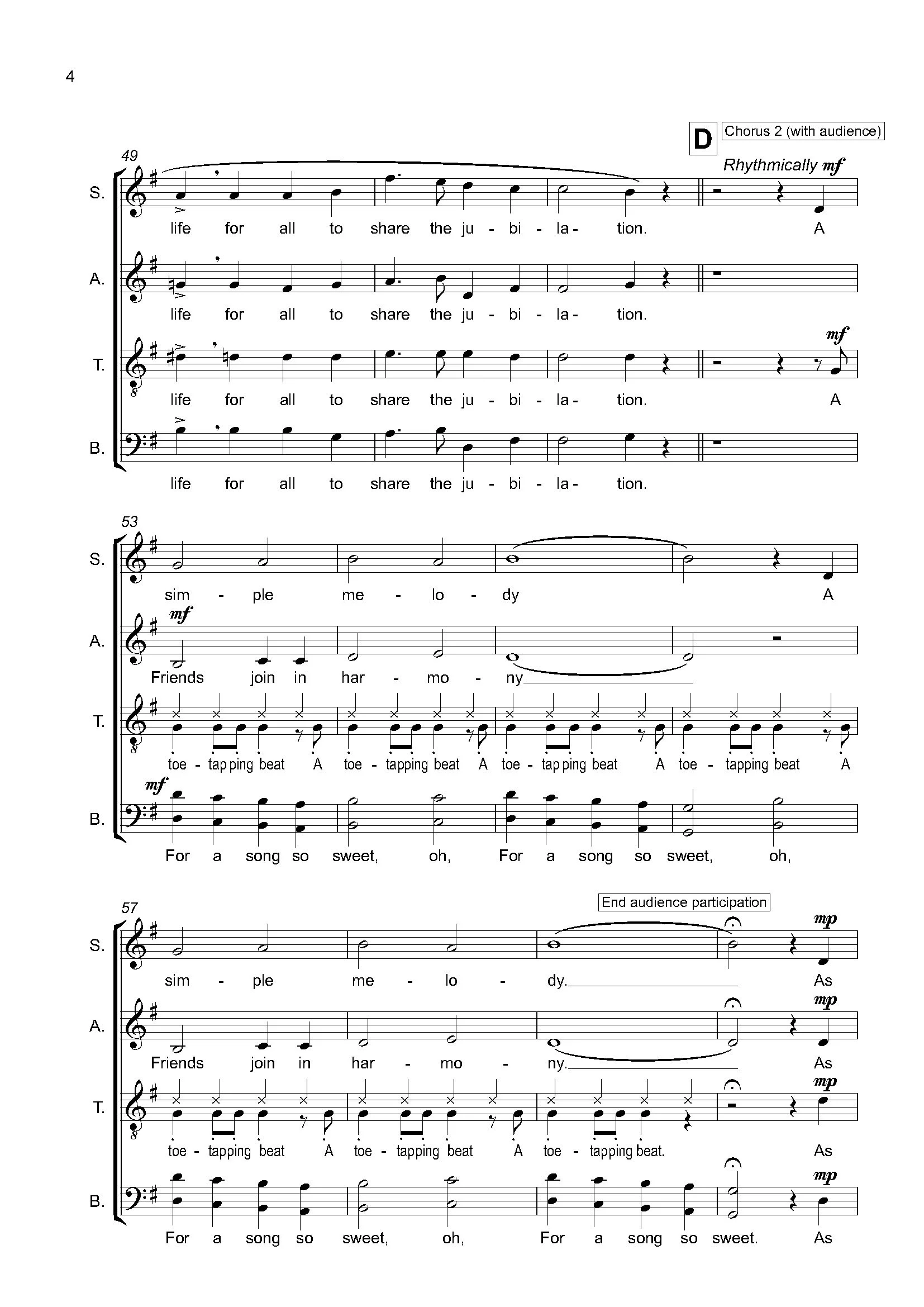 Image 3 of 4
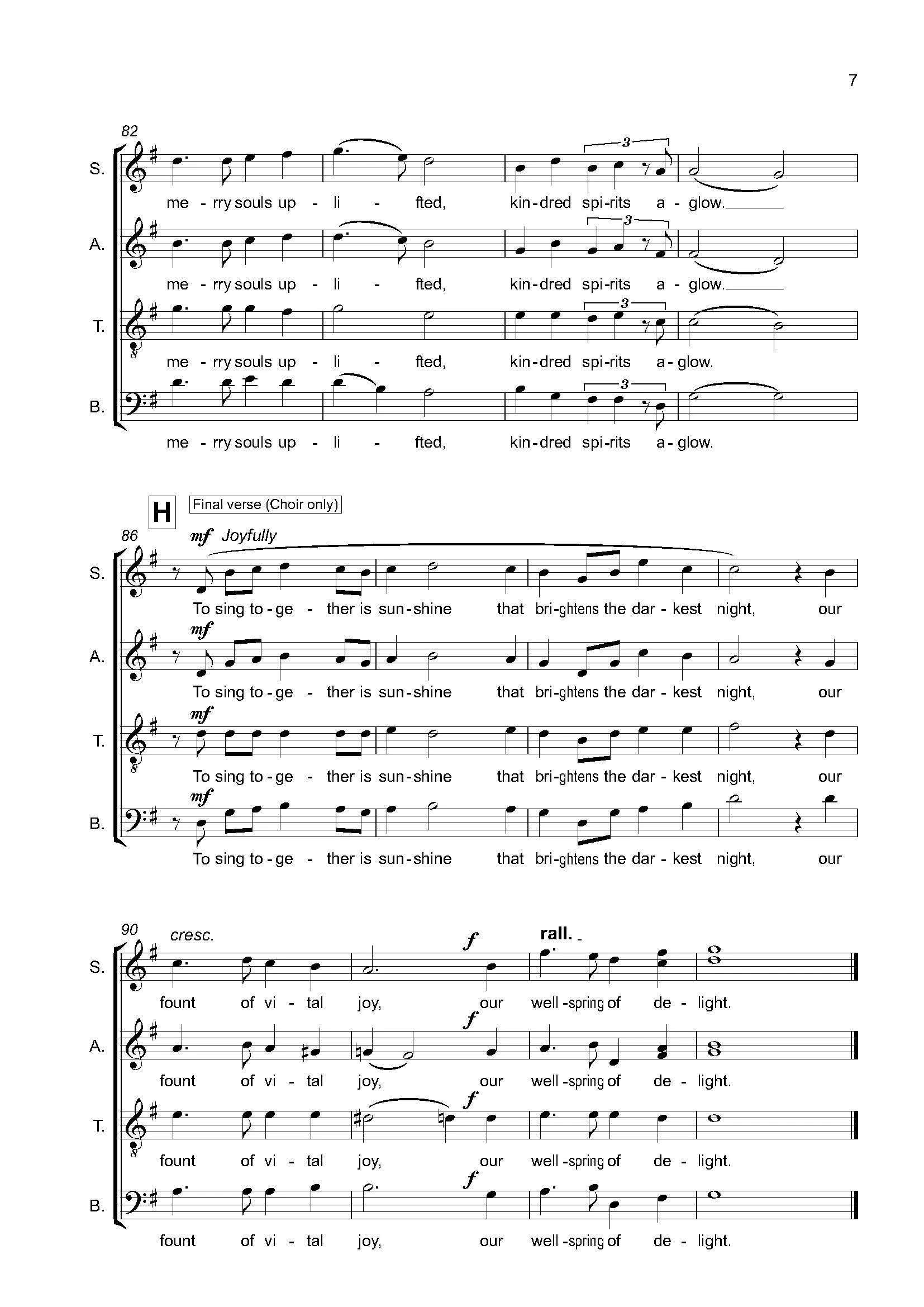 Image 4 of 4
Music for Life, 2026, The Resonants, directed by Kylie Van Djik, live performance
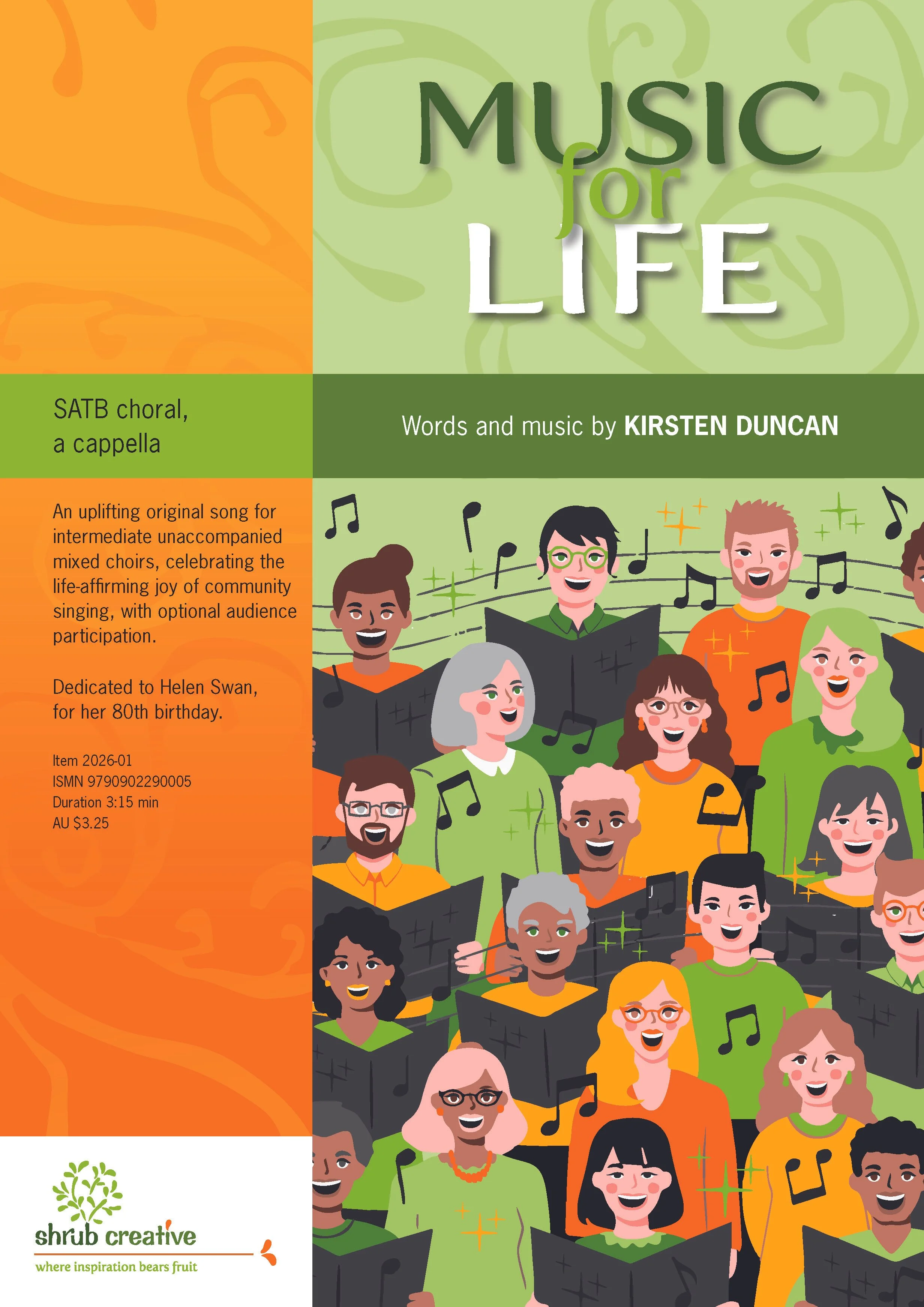
Voicing: SATB a cappella, with optional audience participation
Item: 2026.01
ISMN: 9790902290005
Duration: 3:15 min (depending on audience participation)
PDF file: 12 pages to print at size A4, includes front cover, information about the work and composer, music pages, back cover
Composer’s note
This choral work by Kirsten Duncan is an original, uplifiting, easy intermediate song for unaccompanied mixed choirs and audience, celebrating the essential, life-affirming joy of singing with friends, paying tribute to composers, conductors and choirs for their roles in sharing choral music with their communities: “as long as we have music, our hearts onwards will go”!
I wrote this song for a 2026 concert to celebrate the 80th birthday of Helen Swan, Founder and Director of award-winning Canberra choir The Resonants, as a tribute to her many decades as a choir director, music teacher and professional singer who continues to share her love of vocal music with her community. Her dedication, passion and drive for excellence in choral music have gifted generations of singers with vocal techniques, knowledge of a wide variety of choral repertoire, and social connections that foster wellbeing. Thank you, Helen, from the bottom of my heart!
The lyrics “To sing together is sunshine that brightens the darkest night” were inspired by a quote from the heartwarming British movie ‘Bank of Dave’ (2023), which Helen shared with The Resonants in a rehearsal in late 2025.
Musically, this original song for unaccompanied mixed intermediate choirs is bright and harmonically quite straightforward in G major. The verses and interludes for SATB choir should be sung with plenty of expression and freedom for maximum choral beauty. They are interspersed with a chorus written for audience participation, with the Conductor and choir teaching four simple 4-bar parts to four audience groups on the go (divide the room into sections 1, 2, 3 & 4 before starting): a melody, a harmony, a rhythm section and a counter-melody. These parts are scored for SATB for simplicity, but can be sung at whatever octave individuals find most comfortable. Alternatively, the choruses could simply be sung by the choir, building the four parts in quick sequence (i.e. skip each “audience group join in” repetition) on the first occurrence [B].
Share your choir’s love of singing with your audience at a celebratory family concert – the sense of achievement and connection from singing ‘Music for Life’ together should leave everyone with “spirits aglow”!